
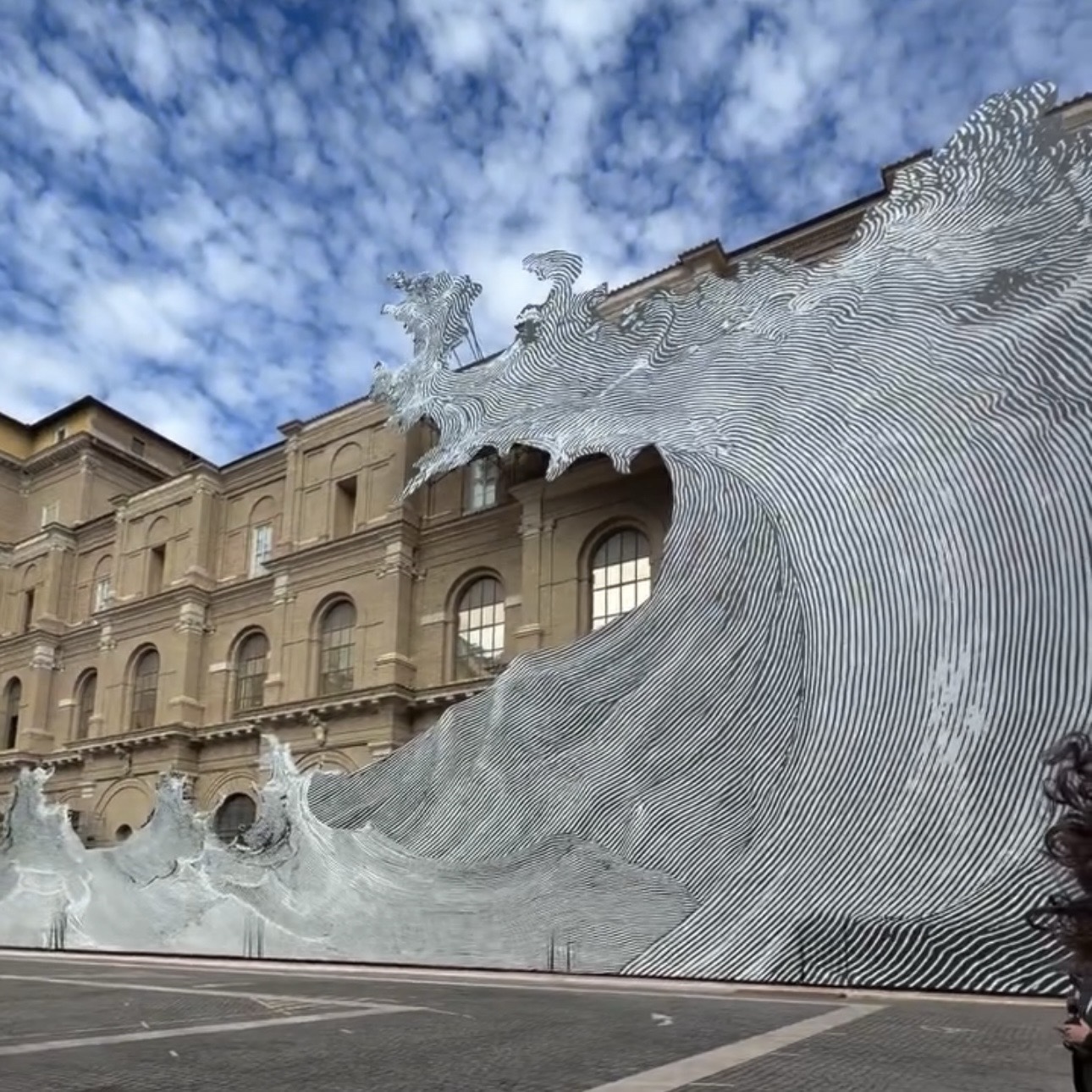
A Roma, da oggi, c’è un’onda che sta per entrare nella Biblioteca Apostolica Vaticana. È enorme. Bianca e nera. Sale sulla facciata cinquecentesca come se, da un momento all’altro, dovesse travolgere tutto. Libri. Manoscritti. Mappe. Disegni. Secoli di memoria.
L’ha creata JR, l’artista francese che da anni ha questa curiosa abitudine di prendere edifici che pensavamo di conoscere e costringerci a guardarli di nuovo. L’opera si chiama Diluvium ed è l’ingresso monumentale di AQVA, la mostra inaugurata oggi da Papa Leone XIV alla Biblioteca Apostolica Vaticana. Fa parte di un progetto dal titolo ancora più bello: Catastrofe e Meraviglia. Che poi sono probabilmente le due parole migliori per raccontare l’acqua.
Perché l’acqua è la cosa che ci tiene vivi.
Ma è anche una delle cose che, da sempre, possono distruggere ciò che abbiamo costruito. E in una biblioteca questa contraddizione diventa quasi perfetta. Pensateci. Abbiamo passato migliaia di anni a scrivere per impedire alle cose di scomparire. Abbiamo inciso pietre, riempito pergamene, stampato libri, costruito biblioteche. Come se l’essere umano avesse capito molto presto che vivere non bastava. Bisognava lasciare qualcosa che dicesse: siamo stati qui. Poi arriva l’acqua. E all’acqua non interessa molto quanto sia raro un manoscritto.
Forse è per questo che JR ha scelto il Diluvio. La sua gigantesca onda è ispirata alle incisioni realizzate da Gustave Doré nell’Ottocento per illustrare la Bibbia. Ma guardandola oggi sembra incredibilmente contemporanea. Perché conosciamo bene quelle immagini. Le vediamo nelle città sommerse dopo un’alluvione. Nei fiumi che escono dagli argini. Nelle case riempite di fango. Negli archivi, nelle fotografie e nei ricordi che qualcuno cerca disperatamente di salvare dall’acqua.
JR prende quella paura e la mette proprio davanti a uno dei luoghi che da secoli fanno esattamente il contrario della catastrofe: conservano. Ed è qui che l’opera diventa bellissima. Perché dietro quell’onda ci sono milioni di pagine. Fuori, simbolicamente, qualcosa sembra sul punto di cancellare tutto. Dentro, da secoli, qualcuno continua ostinatamente a salvare tutto. Forse una biblioteca è proprio questo.
Un argine costruito contro il tempo. E forse noi esseri umani continuiamo a scrivere, fotografare, dipingere, raccontare e conservare per la stessa ragione per cui costruiamo argini davanti all’acqua. Perché sappiamo benissimo che prima o poi qualcosa passerà. Ma nel frattempo facciamo tutto il possibile perché non porti via ogni cosa.
#ig_italia
Opera @jr x @bibliotecaapostolicavaticana
______
In Rome, as of today, there is a wave about to enter the Vatican Apostolic Library. It is enormous. Black and white. It rises across the sixteenth-century façade as if, at any moment, it might sweep everything away. Books. Manuscripts. Maps. Drawings. Centuries of memory.
It was created by JR, the French artist who for years has had this curious habit of taking buildings we thought we knew and forcing us to look at them again. The work is called Diluvium, and it forms the monumental entrance to AQVA, the exhibition inaugurated today by Pope Leo XIV at the Vatican Apostolic Library. It is part of a project with an even more beautiful title: Catastrophe and Wonder. Which are probably the two best words to describe water.
Because water is what keeps us alive.
But it is also one of the things that, since the beginning of time, has been capable of destroying what we have built. And inside a library, this contradiction becomes almost perfect. Think about it. We have spent thousands of years writing things down to keep them from disappearing. We have carved into stone, filled parchments, printed books, built libraries. As if human beings understood very early on that simply living was not enough. We had to leave something behind that said: we were here. Then water arrives. And water does not particularly care how rare a manuscript is.
Perhaps that is why JR chose the Flood. His gigantic wave is inspired by the engravings created by Gustave Doré in the nineteenth century to illustrate the Bible. And yet, looking at it today, it feels incredibly contemporary. Because we know those images well. We see them in cities submerged after a flood. In rivers bursting their banks. In homes filled with mud. In archives, photographs and memories that someone is desperately trying to save from the water.
JR takes that fear and places it right in front of one of those places that, for centuries, have been doing exactly the opposite of catastrophe: preserving. And this is where the work becomes beautiful. Because behind that wave are millions of pages. Outside, symbolically, something seems about to erase everything. Inside, for centuries, someone has stubbornly continued to save everything. Perhaps that is exactly what a library is. An embankment built against time. And perhaps we human beings keep writing, photographing, painting, telling stories and preserving things for the same reason we build embankments against water.
Because we know perfectly well that sooner or later, something will come through. But in the meantime, we do everything we can to make sure it doesn’t carry everything away.
Comments are closed.