
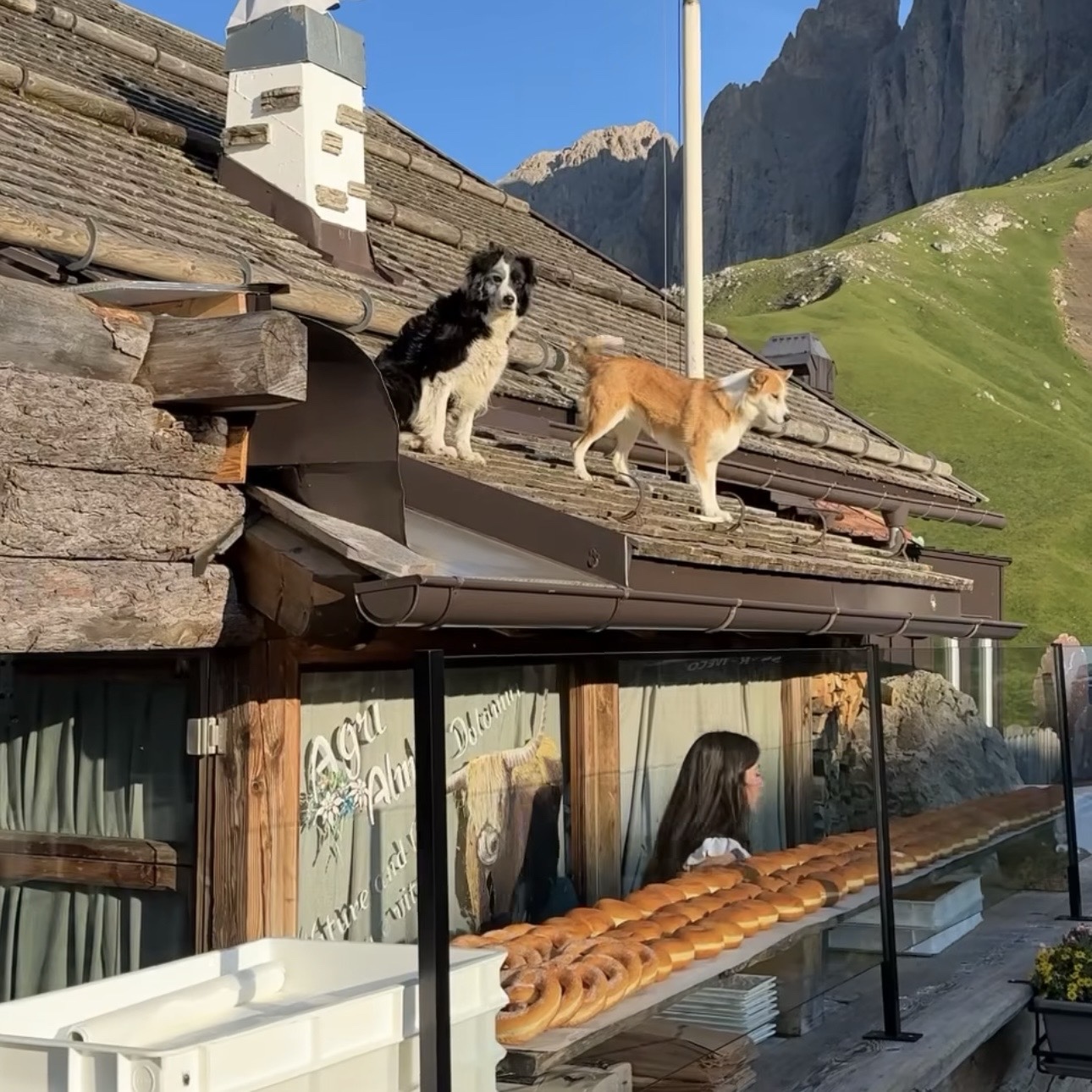
Ci sono due cani sul tetto di una baita al Passo Sella che guardano la gente arrivare. Probabilmente non conoscono i dati sul turismo italiano dell’estate 2026. E probabilmente è meglio così.
Sotto di loro, intanto, succede una cosa curiosa. C’è gente che cammina, gente che fotografa il Sassolungo, gente che cerca un tavolo e gente che è salita fin quassù, a oltre duemila metri, anche per fare colazione con un krapfen ripieno di crema. Che potrebbe sembrare un dettaglio insignificante, se non fosse che racconta abbastanza bene quello che sta succedendo alle nostre montagne.
Per molto tempo abbiamo pensato alla montagna soprattutto d’inverno. Sci, neve, seggiovie, settimane bianche. D’estate c’era il mare. Era una specie di accordo non scritto tra gli italiani e la geografia. Poi qualcosa è cambiato.
Nell’estate 2026 le località montane e appenniniche italiane dovrebbero superare i 79 milioni di presenze, il 5,8% in più rispetto all’anno scorso, con circa 7,8 milioni di arrivi, cresciuti addirittura del 14,4%. Con un giro d’affari stimato è di 6,6 miliardi di euro.
E ad agosto quasi un italiano su cinque che sceglie una destinazione nazionale indica la montagna.
Naturalmente c’entra il caldo. Quando nelle città il termometro comincia a somigliare al display di un forno, improvvisamente una passeggiata a duemila metri diventa molto più interessante di quanto sembrasse a febbraio. Ad agosto, infatti, la montagna ha registrato una crescita dei pernottamenti superiore a quella prevista per l’insieme delle destinazioni italiane. Ma forse non è soltanto questo. Abbiamo riscoperto che una vacanza può essere anche svegliarsi presto, infilarsi un paio di scarponi e cominciare a camminare. Che il lusso può essere avere ventidue gradi invece di trentotto. Che si può passare una mattina seguendo un sentiero senza che succeda assolutamente niente e tornare comunque con la sensazione che sia successa una cosa importante.
E abbiamo scoperto anche una montagna diversa da quella dei nostri nonni. Ci sono biciclette, trekking, rifugi diventati destinazioni gastronomiche, eventi, famiglie, ragazzi, stranieri. Ci sono luoghi diventati famosi attraverso Instagram e TikTok. Al Friedrich August, proprio nella zona del Passo Sella, quest’estate si sono viste persino lunghe code di persone in attesa dei suoi ormai celebri krapfen alla crema.
Insomma, siamo riusciti a inventare la fila anche a 2.300 metri. Che è una cosa molto italiana. Ma dentro questi numeri c’è anche un piccolo avvertimento. Gli italiani arrivano di più e rimangono meno: la permanenza media in montagna è scesa da 10,9 a 9,2 giorni. Più persone, più spostamenti, più automobili, più pressione sui luoghi e sui servizi.
Ed è forse questa la sfida più interessante dei prossimi anni. Perché la montagna non deve diventare semplicemente il nuovo posto dove trasferire le abitudini che abbiamo al mare o nelle città. Non serve salire fino a duemila metri se poi abbiamo la stessa fretta che avevamo a quota zero. La montagna funziona esattamente al contrario.
Ti obbliga a rallentare. A guardare dove metti i piedi. Ad aspettare. Ma soprattutto a capire che non tutto deve essere raggiunto in cinque minuti. Forse è proprio per questo che sempre più persone stanno tornando quassù. Per il fresco, certo. Per i panorami. Per camminare. Per mangiare un krapfen con davanti le Dolomiti. E magari anche per incontrare due cani appollaiati sul tetto di una baita che, senza conoscere una sola statistica sul turismo, sembrano aver capito perfettamente perché siamo venuti fin quassù.
Per ricordarci che ogni tanto, invece di andare più lontano, basta andare un po’ più in alto.
#ig_italia
@antoniodimaiolo_
———-
There are two dogs on the roof of a mountain hut at Passo Sella, watching people arrive. They probably don’t know the figures for Italian tourism in the summer of 2026. And that’s probably for the best.
Meanwhile, something curious is happening below them. There are people walking, people taking pictures of the Sassolungo, people looking for a table, and people who have climbed all the way up here, more than two thousand metres above sea level, just to have breakfast with a cream-filled krapfen. Which might seem like an insignificant detail, if it didn’t actually tell us quite a lot about what is happening to our mountains.
For a long time, we thought of the mountains mainly in winter. Skiing, snow, chairlifts, ski holidays. Summer was for the seaside. It was a kind of unwritten agreement between Italians and geography. Then something changed.
In the summer of 2026, Italy’s mountain and Apennine destinations are expected to exceed 79 million overnight stays, 5.8% more than last year, with around 7.8 million arrivals, up an impressive 14.4%. The estimated turnover is €6.6 billion.
And in August, almost one in five Italians choosing a domestic destination opts for the mountains.
Of course, the heat has something to do with it. When the thermometer in our cities starts looking like the display on an oven, suddenly a walk at two thousand metres becomes much more appealing than it seemed back in February. In August, in fact, the mountains recorded stronger growth in overnight stays than that forecast for Italian destinations as a whole. But perhaps that’s not the only reason. We have rediscovered that a holiday can also mean waking up early, putting on a pair of hiking boots and simply starting to walk. That luxury can mean twenty-two degrees instead of thirty-eight. That you can spend an entire morning following a trail without anything happening at all, and still come back feeling as though something important has happened.
And we have also discovered a different kind of mountain from the one our grandparents knew. There are bikes, hiking trails, mountain huts that have become culinary destinations, events, families, young people, foreign visitors. There are places that have become famous through Instagram and TikTok. At Friedrich August, right in the Passo Sella area, this summer there have even been long queues of people waiting for its now-famous cream-filled krapfen.
In short, we have managed to invent queueing even at 2,300 metres. Which is a very Italian thing to do. But hidden inside these figures there is also a small warning. Italians are arriving in greater numbers but staying for less time: the average mountain holiday has fallen from 10.9 to 9.2 days. More people, more journeys, more cars, more pressure on places and services.
And perhaps this is the most interesting challenge for the years ahead. Because the mountains must not simply become the new place where we transfer the habits we have at the seaside or in our cities. There is little point climbing to two thousand metres if we bring with us the same hurry we had at sea level. The mountains work in exactly the opposite way.
They force you to slow down. To watch where you put your feet. To wait. But above all, to understand that not everything has to be reached in five minutes. Perhaps that is exactly why more and more people are coming back up here. For the cooler air, of course. For the views. To walk. To eat a krapfen with the Dolomites in front of you. And perhaps also to meet two dogs perched on the roof of a mountain hut who, without knowing a single tourism statistic, seem to have understood perfectly well why we came all the way up here.
To remind us that every now and then, instead of going farther, we simply need to go a little higher.
Comments are closed.